
A Shrinking World
The long flares that narrowed my world and pushed me to the breaking point.

If you’re just joining the ride, I recommend starting from the beginning. Each post builds the trail that led me here.
The shrinking world I mentioned in my previous entry, What They Saw, What I Felt, didn’t happen all at once. It creeps up on you. The boundaries begin contracting quietly, inch by inch, until one day you wake up and realize just how small your world has become. Looking back now, that’s exactly what happened to me as UC gained ground day after day, month after month, year after year.
If What They Saw, What I Felt was about the daily reality of living with UC, this one is about the slow erosion of everything that made up the life I loved — relationships, routines, confidence, identity — until only the essentials remained.
The flare that hit me during a trip to Colorado in 2009 was the first real shockwave. During it, I experienced all of the unforgiving things that shaped my existence. I had been managing my UC — or thought I had been — but that flare changed everything. It hit harder than anything I’d experienced up to that point. Severe pain, dramatic weight loss, urgency, exhaustion, embarrassment. A sudden and unforgiving step into the next stage of the disease.
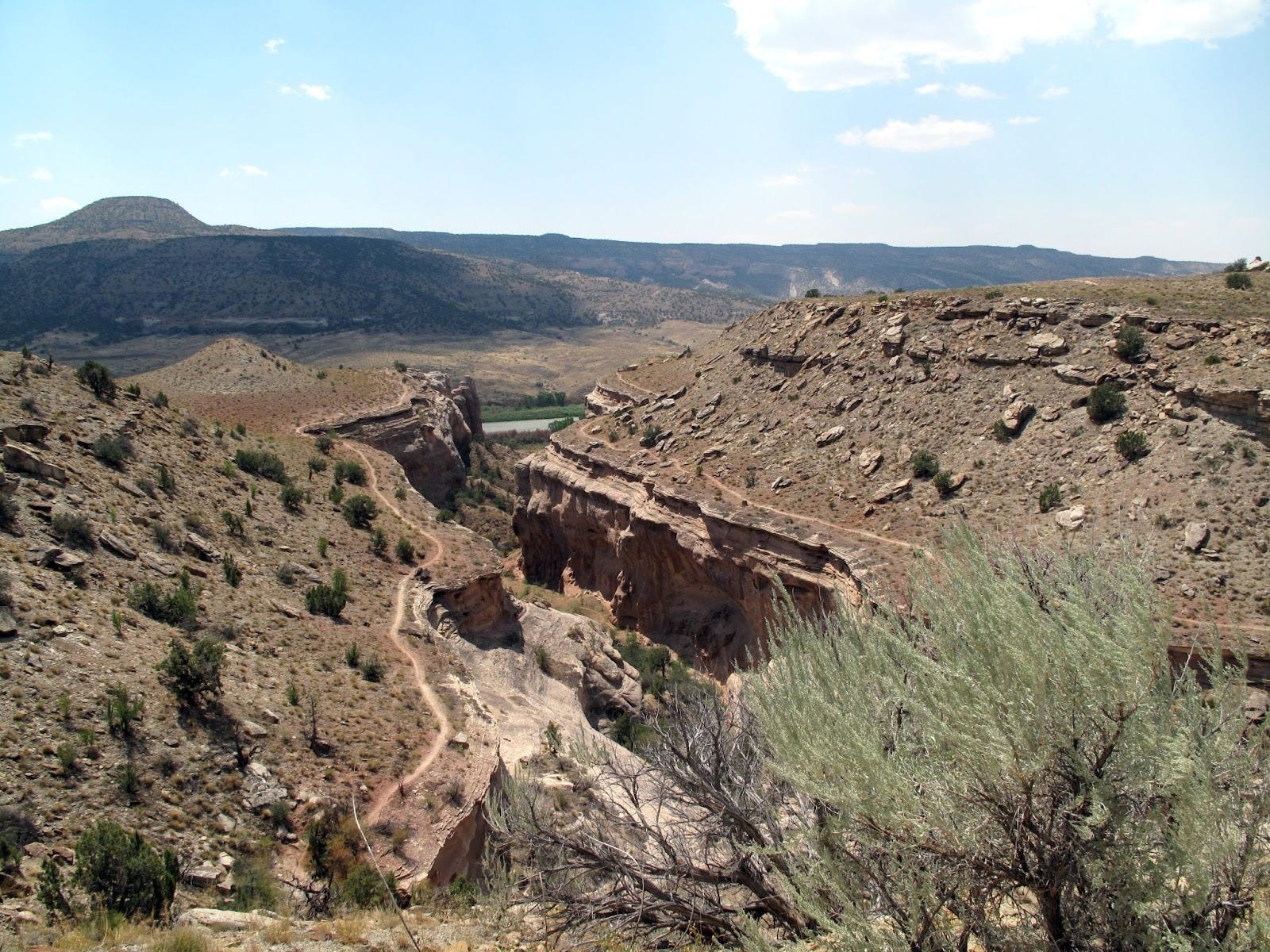
At the time, I treated it like just another setback. Something temporary. Something that, again, I thought I could ride through or tough out.
Unfortunately, it was just a glaring sign of things to come.
Over the next decade, flare-ups grew more intense and more frequent.
Beyond the “minor” ones, three major ones hit me in 2013, 2016, and 2019 — I lost over thirty pounds in a matter of weeks during each, and then, after each, I thought I had recovered. But, it was denial.
Each time, the weight loss did more than weaken my body. It wore me down in ways I didn’t want to acknowledge.
Riding got harder. Sleeping became more difficult. Eating became more methodical. I planned my days around bathroom access, mapped routes like I was preparing a ride for one of my books, and learned to adapt in ways no one sees unless they’ve lived through it themselves. I downloaded apps to help me find clean bathrooms, tracked meals to identify triggers, and monitored my sleep. I thought I could “manage” it. But the steps were inevitable, and the UC kept eroding my strength and shrinking my life.
It’s difficult to explain how isolating UC can be. This condition affects something so personal that it makes it incredibly difficult to talk about. Digestion and elimination aren’t things people easily discuss — which means they aren’t things you can easily share.
I withdrew. Not in a dramatic or sudden way, but slowly. I protected my limited energy like it was the last resource I had. I rode alone a lot more and hesitated to ride with others — I still did, but I found myself declining more and more invitations.
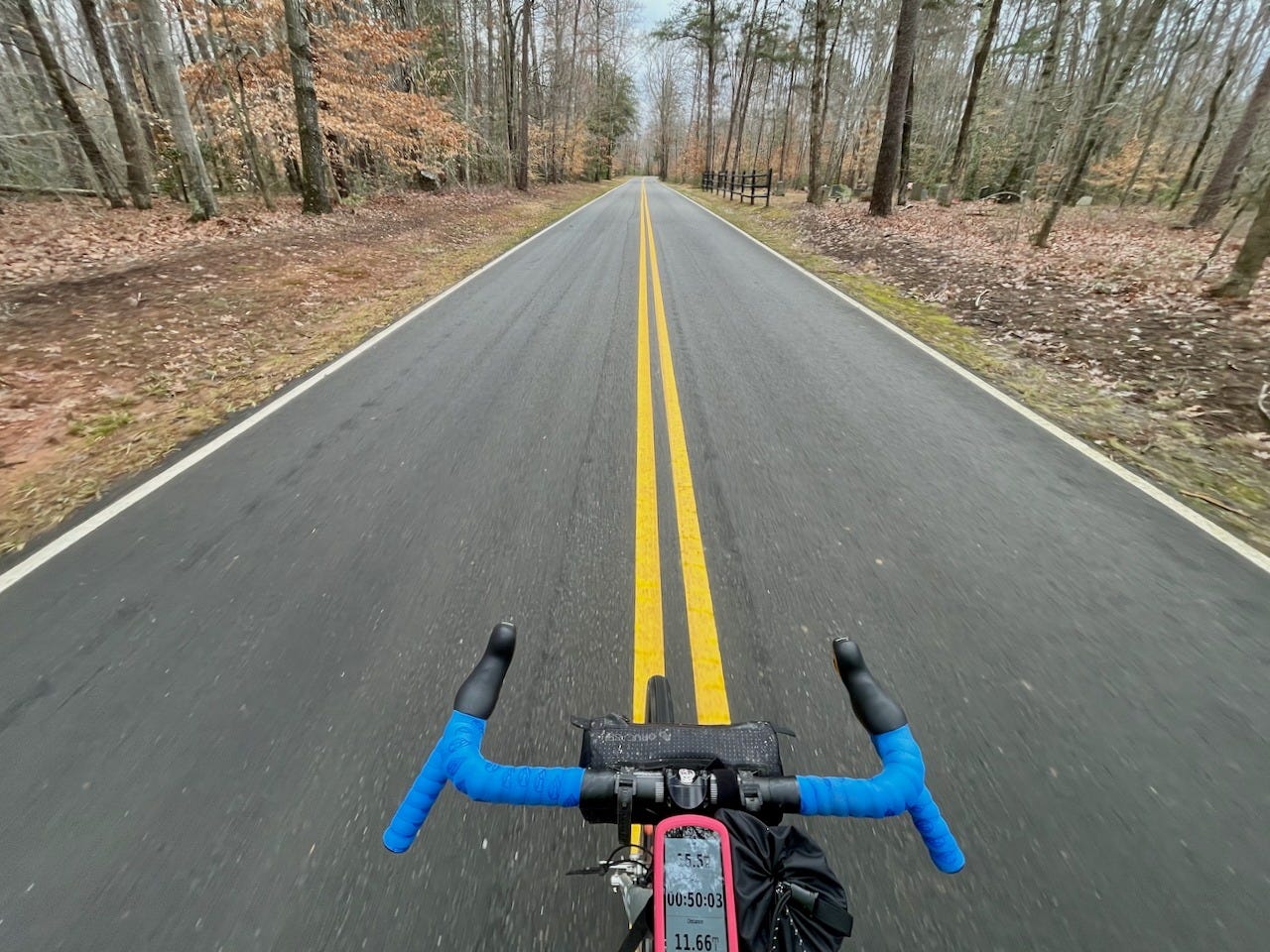
The self-pity was constant, and I frequently asked myself:
Why me? What did I do to deserve this? What could I have done differently?
It fueled depression, anger, and guilt. Guilt for being distant. Guilt for not being the partner, the father, the friend I wanted to be.
UC has a way of rearranging your emotional landscape until you barely recognize it.
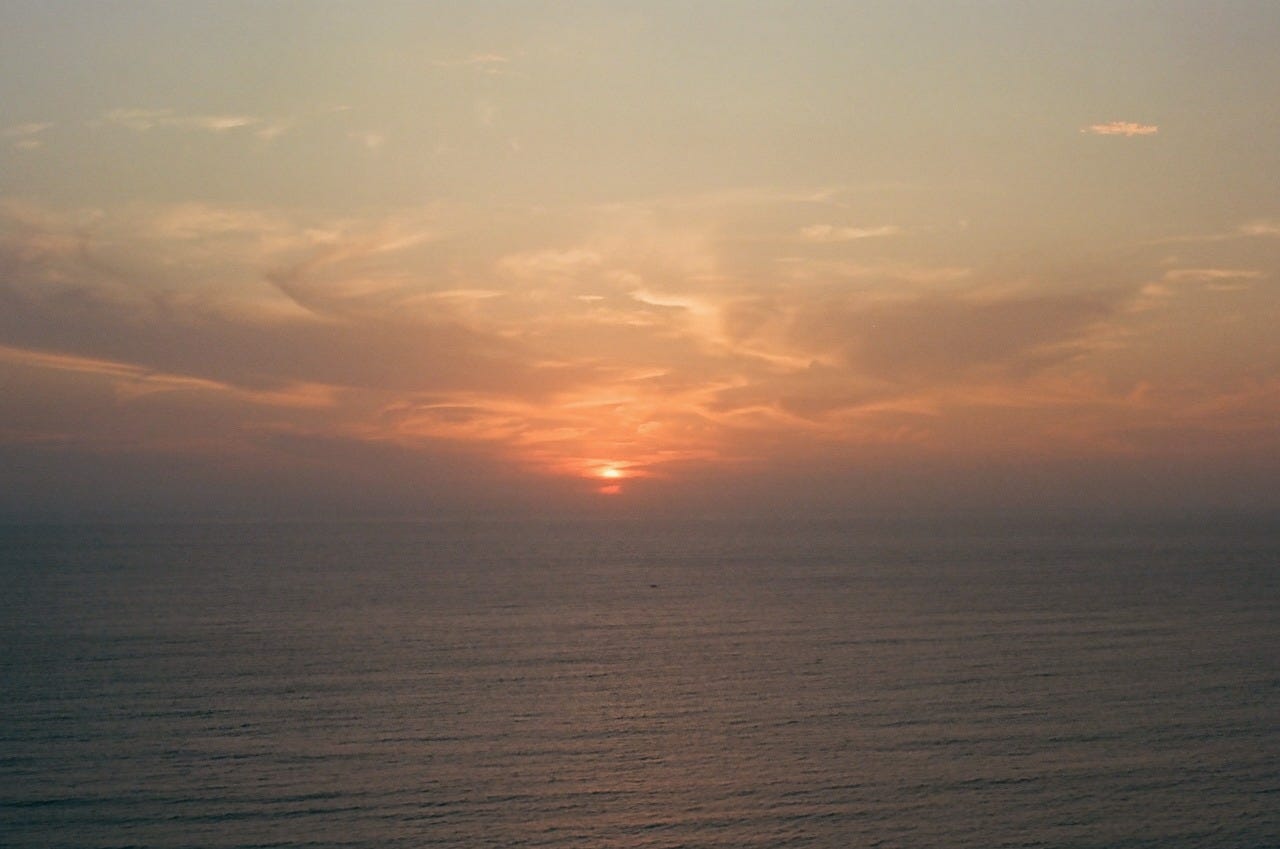
Around that same time, before my mom or dad passed, I picked up my father’s old film camera again. Film forces you to slow down — to choose a frame carefully, to be patient, to pay attention. In early January 2024, as the flare was beginning its long and punishing run, I found myself drawn to small moments like this sunset. I didn’t understand why then, but I kept shooting after that.
In hindsight, those quiet, intentional moments behind the lens were the beginning of something I couldn’t yet name — the earliest flicker of the acceptance I would slowly grow into later. In a year when everything felt like it was slipping away, looking through that viewfinder gave me one steady point of focus, a place where the outside world paused just long enough for me to breathe.
Then came the flare that changed everything — the one that lasted roughly thirteen months. The one where I lost nearly fifty pounds, succumbed to fatigue, and eventually made surgery not just an option, but a necessity.
It wasn’t just the UC, but everything that happened around it.
My mother’s decline and passing.
My father’s failing health and eventual death.
Five trips to Lima that drained me emotionally and physically.
Dental complications and infections.
Failed medications.
The stress from work that felt relentless.
Grief, illness, and exhaustion collapsed into one continuous nightmare of a ride.
Life didn’t just shrink during that period — it all but closed in around me.
There were nights when the pain was so bad I prayed not to wake up. Nights when I felt I was dragging my family through something they didn’t deserve. Nights when my own thoughts frightened me.
It is hard to admit that, but it’s part of the truth. And yet, something else happened during that time: a small, fragile shift.
I began to sit with my emotions instead of fighting them. I started meditating. I cut out the noise — social media, news, anything that made my world harder to digest.
Slowly, a kind of acceptance began to form.
If life shrinking felt suffocating, that acceptance felt like cracking a window open in a sealed room. It let the air in and helped me breathe, and I began to accept what I had to do.
With help from my wife, I began to understand that the world I’d been clinging to wasn’t sustainable anymore — and that maybe, just maybe, surgery wasn’t the end of my life, but the beginning of getting it back. That shift didn’t remove the grief or the fear or the pain, but it gave me enough clarity to see the necessary path ahead, and the trail I should have been on all along.
The decision — and the surgery — were coming.
This post reflects personal experience. A medical disclaimer is available on the About page.
 | A guest post by
|