
When I Woke Up
I don’t remember much after arriving in the operating room. I remember falling into darkness, then faint light and voices.

If you’re just joining the ride, I recommend starting from the beginning. Each post builds the trail that led me here.
When I opened my eyes at the end of May 7th, it was 10:30 PM. Nearly eleven hours had passed. The surgery had taken nine hours, not six. I had lost a significant amount of blood and required four units during the procedure. My blood pressure had dropped dangerously low, and my surgeon made the decision to keep me in the ICU for close monitoring.
That first day is mostly gone from my memory.
There are fragments — lights overhead, muffled conversations, the weight of pain pressing down on everything, remembering why I was here. I had started the morning with a colon. Now it was gone. What stands out most is seeing my wife in the corner of the room. She stayed the night. I didn’t even realize I was in the ICU until much later.
On the second day, the nurses encouraged me to stand.
I tried.
The pain was overwhelming. My body refused to cooperate. Even small transitions — lying to sitting, sitting to standing — felt like they demanded everything I had. Once I was moved to a regular room, I managed a few assisted stands, but each one came at a cost. Sitting in the recovery chair was unbearable. Within minutes, I had to lie back down.
When I woke up, I already had my first ostomy bag.
I was too sedated to process it at first. On May 9th, just two days after surgery, the stoma nurse showed me how to care for it. Seeing it for the first time was surreal — red, swollen, protruding farther than I expected. I was told it would shrink over time. It did. By week three, it was nearly half the size.
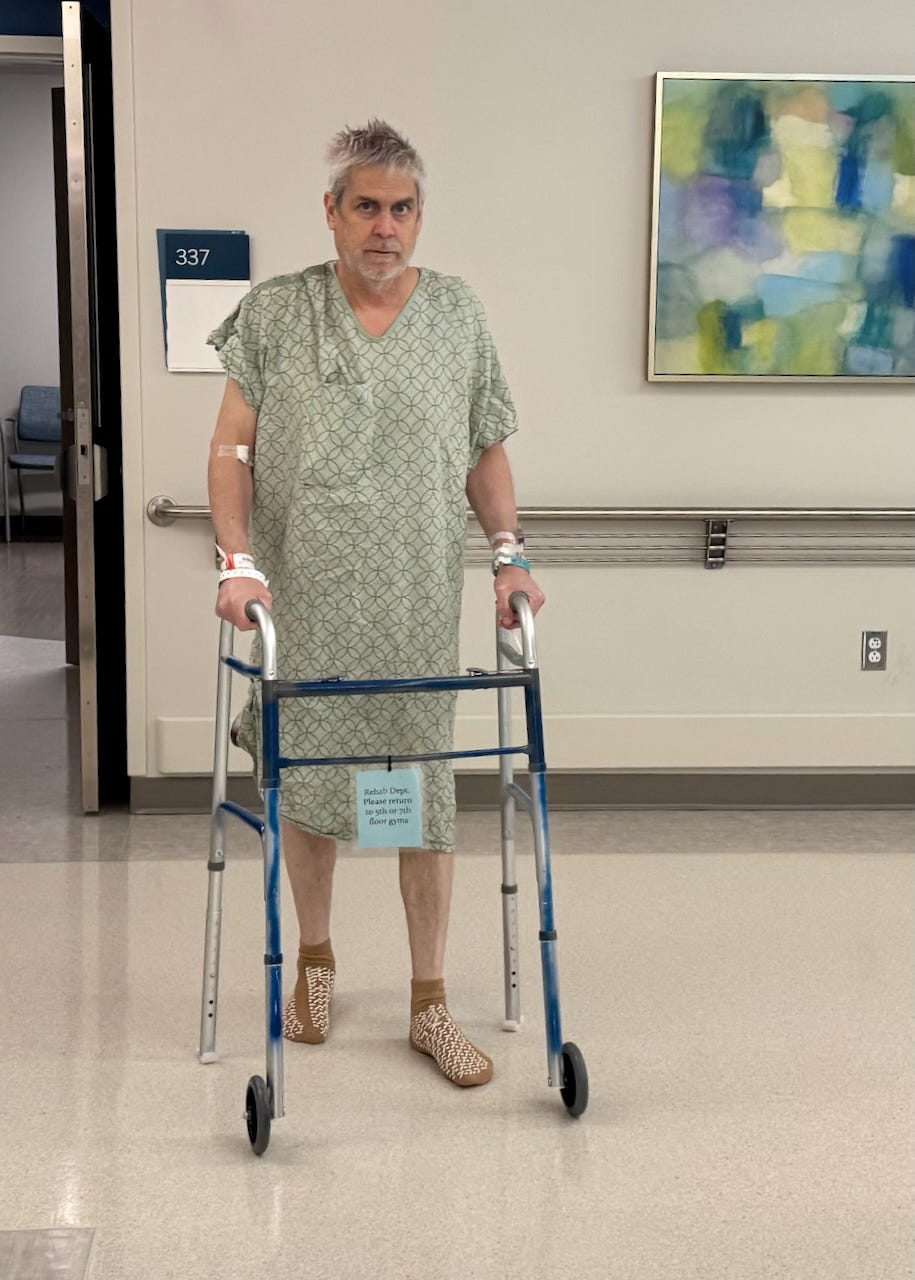
By day four, May 10th, I managed short walks.
Shuffle. Pause. Breathe. Return to bed.
That day I completed my first real lap of the ward — maybe a hundred yards. It was slow, but it felt monumental. I desperately wanted a shower, but that would have to wait. For now, a wipe-down would have to do.
My body was a map of interventions.
Incisions across my abdomen. Staples where my colon and rectum had been removed. Stitches sealing my anus shut. A drainage tube pulling fluid from deep in my pelvis. Four smaller incisions glued closed. The largest incision burned with a deep, constant ache. The surgical site where my anus had been sealed would take the longest to heal. Even now, it feels strange in ways I can’t fully explain.
On day five, I was cleared to go home.
I didn’t want to — but I had to. Now it was time to focus on recovery. It meant the worst part — the part that had dictated my life — was gone.
Not perfection.
Progress.
This post reflects personal experience. A medical disclaimer is available on the About page.